01 / NARROW
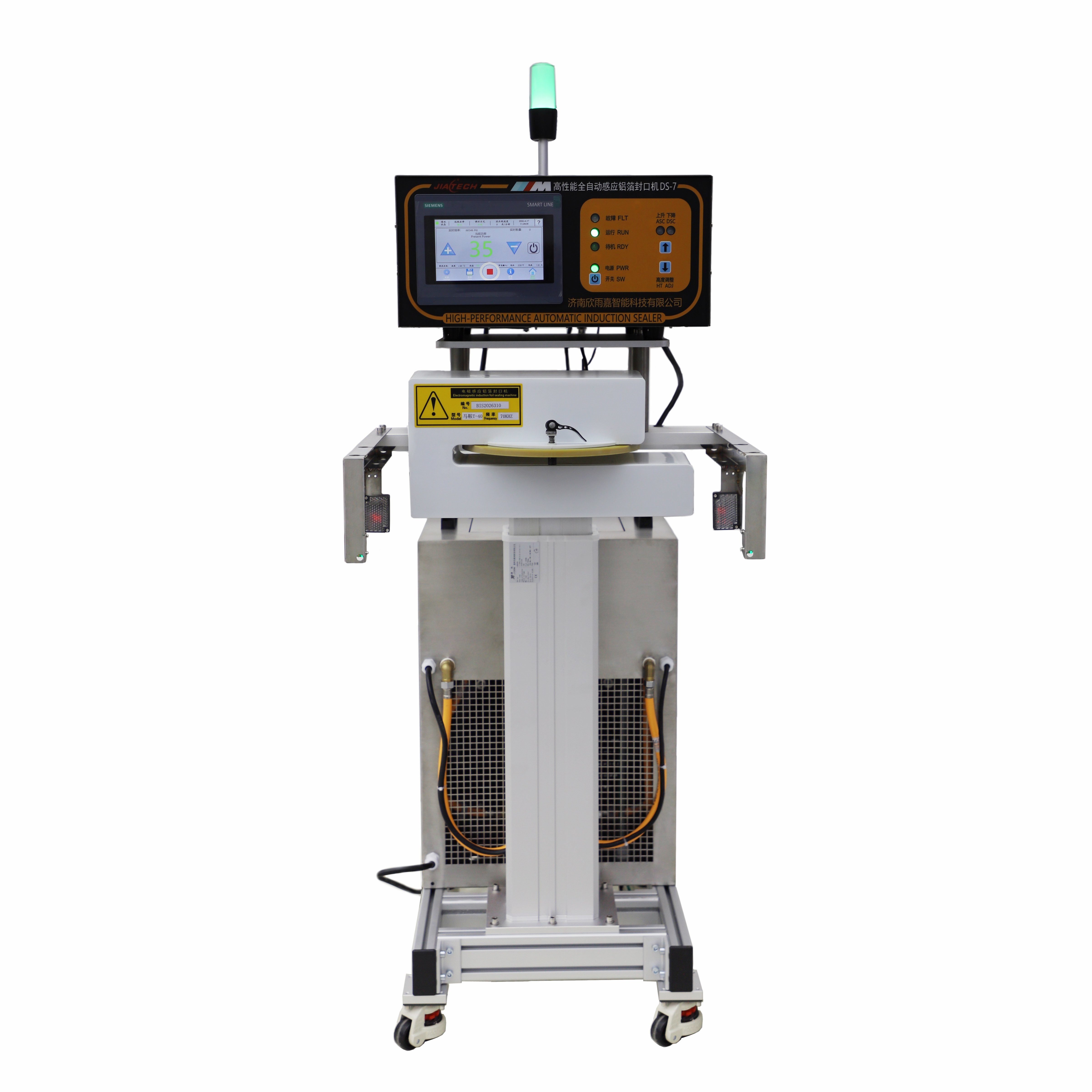
10–90 mm
Screw caps on PET, PE and PP bottles
The everyday pharma, food and lubricant line. Foil liner sealed under a plastic screw cap.
DS-7DS-5A Air


Nine induction sealers come out of one plant in Jinan. Which one fits your bottle depends on three things — cap diameter, how hard the line runs, and what the cap sits on. Pick your cap below and we will name the model, the head and the power.
10–90 mm
Screw caps on PET, PE and PP bottles
The everyday pharma, food and lubricant line. Foil liner sealed under a plastic screw cap.
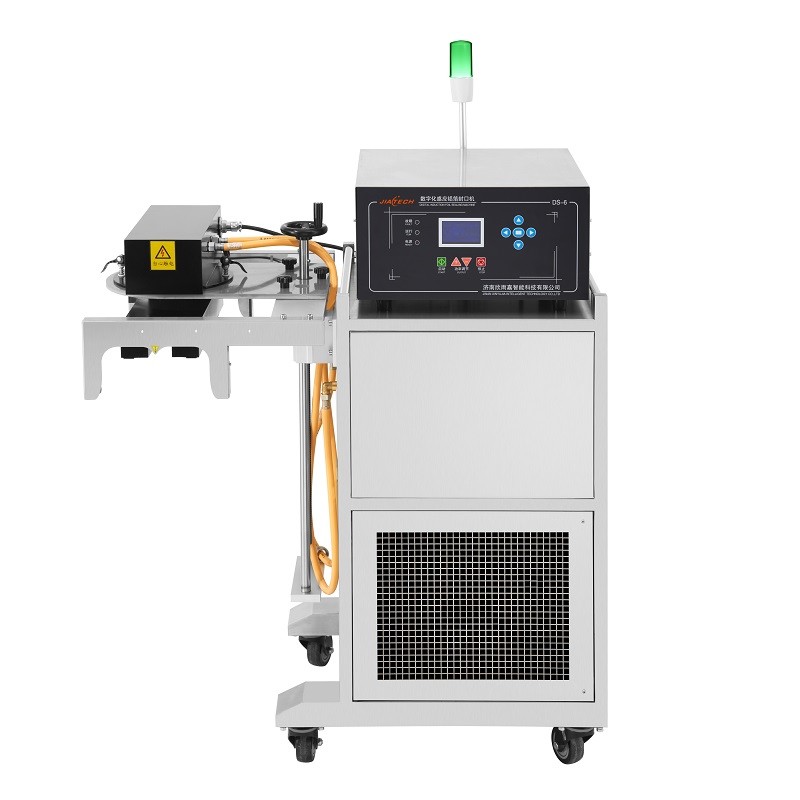
90–200 mm
Jars, tubs and wide-neck drums
Wide sealing area needs a bigger head and more power reserve. Tunnel head available for hard-to-seal necks.
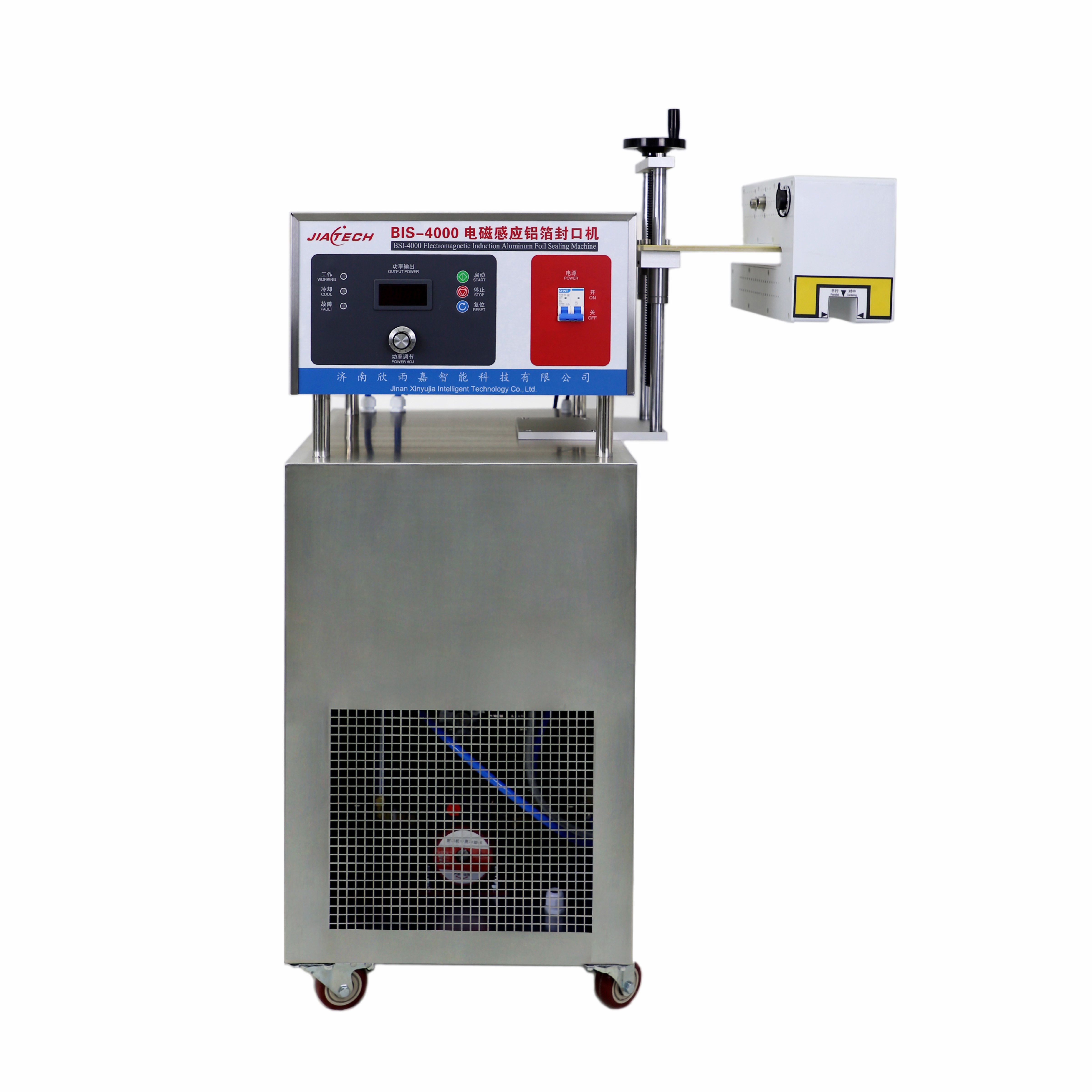
10–30 mm
Dropper, vial and ampoule lines
Small necks lose heat fast. A tunnel head keeps the field concentrated as the bottle passes.
Analog boards drift as the cabinet heats up — the working point moves and the seal weakens over a shift. A digital loop holds the point in software. Here is the difference on our own bench, not a brochure.
Where these numbers come from: in-house bench test, 40 mm PE bottle with standard foil liner, 60–90 kHz, 25 °C ambient. Analog column = a conventional analog board run under the same conditions. Full test sheet available on request — ask for it and we send the raw log, not a PDF of claims.
We have quoted thousands of these lines. The same five mistakes come up again and again, and four of them cost more than the machine.
A 5 kW machine pointed at a 20 mm cap does not seal better — it over-cooks the foil edge. Power is headroom, not a quality setting. What decides the seal is the head geometry against the cap diameter.
Pick the head from the cap diameter first, then size the power for line speed.
Air cooling is fine for a single shift and small batches. Leave it running for eight hours at full power and the cabinet heat-soaks, the board de-rates, and the last two hours of production seal weaker than the first two.
Two shifts or more → water-cooled DS-5 / DS-6 / DS-7. Air stays for one shift or lab use.
Foil thickness, the adhesive layer and the cap material have to agree. A liner that works on PE will peel off a PP cap, and a foil that is too thick will not reach temperature in the dwell time your line gives it.
Send caps and liners together — we run the seal test before you commit to a foil supplier.
Above roughly 35 °C inlet, or with low flow, the unit throttles itself to protect the board. Production drops and the operator blames the machine. It is almost always the water.
Tell us your water temperature and pressure when you enquire — or take the sealed-tank models that monitor both.
The cap fits, but the head only adjusts across a fixed band — 710–1315 mm on the DS-7, for example. If your bottle plus conveyor sits outside that band, the machine physically will not go on the line.
Quote bottle height and conveyor height together, not just the cap.
Have a bottle that does not match any of these? Send it. We seal it on the bench and send back a photo of the peel test.
No email gate, no "our sales team will contact you". Answer the questions and the model appears. If it is wrong, tell us why in the form and we will correct it.
Measure the foil disc, not the outside of the cap.
This decides cooling, not power.
Material changes the dwell time and the foil choice.
DS-7
One-piece digital water-cooled sealer for narrow-to-mid caps on a line that runs hard.
Same machine, different head — this is where most mismatches happen. Solid dot means the standard head covers that band. Dashed means it is covered by a custom head we wind to your sample.
| Cap Ø (mm) | BIS-T | BIS-P | A Air | WD-1 | DS-5 | DS-7 | DS-6 | DS-6 PLUS | DS-F |
|---|---|---|---|---|---|---|---|---|---|
| 10–30 | – | – | – | – | |||||
| 30–50 | |||||||||
| 50–70 | |||||||||
| 70–90 | – | – | |||||||
| 90–110 | – | – | – | ||||||
| 110–140 | – | – | – | ||||||
| 140–200 | – | – | – | – | – | – |
BIS-T = BIS-4000 tunnel head · BIS-P = BIS-4000 flat head. Outside 10–200 mm we quote a custom head — send the cap and we come back with a drawing before any money moves.
One-piece body, self-adjusting head, and a sealed water loop. It exists because filling rooms hate two things: floor space and manual changeover. On the DS-7 the head finds bottle height on its own, so switching from a 60 mm to a 200 ml bottle is a recipe change, not a mechanical one.
Every unit below is built in the same plant, on the same boards. The difference is the body, the cooling and the head — which is exactly what decides the price.
Self-adjusting head, sealed water loop, built for clean rooms with limited floor space.
The speed model. 70 m/min and a wider cap window for lines that already run flat out.
The 200 mm machine. Wide-mouth jars, tubs and drums, with power adjustable across the range.
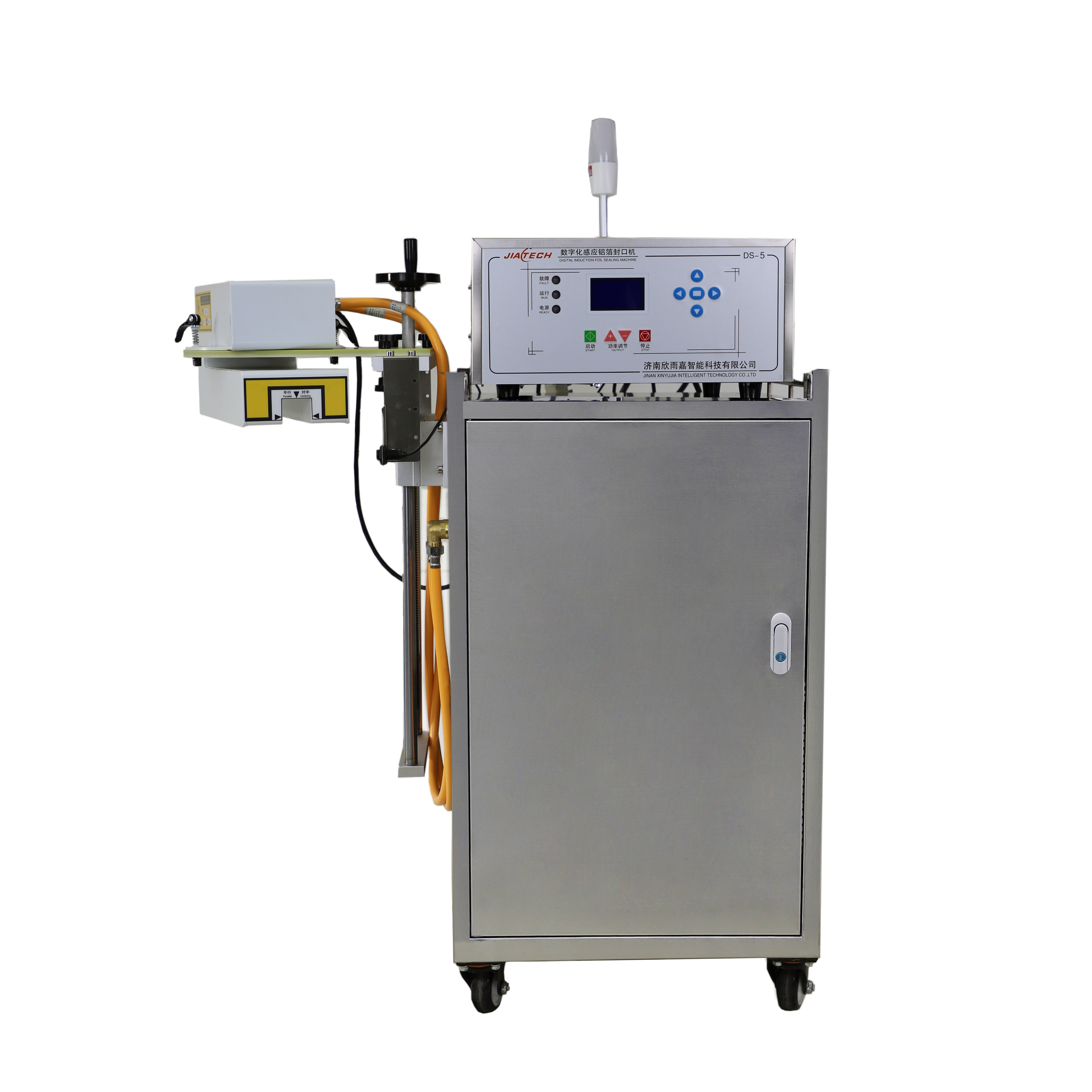
Split-body water-cooled unit. The default for two-shift plants that do not need the DS-7 head.
Control cabinet, pump, pressure switch and lamp in an Ex-rated enclosure. For solvent-based fill halls.

Digital air-cooled unit. No water line, no drain — the right pick for one shift or a lab bench.

Knob control, fan cooled, wide head. For low volume and simple changeovers.
Flat induction head on the BIS platform. Simple, proven, easy to keep running.
Tunnel head concentrates the field around small or awkward necks. 250 bottles a minute.
The same board, dressed differently for the room it lives in. Find the line that looks like yours.
HDPE and glass bottles, GMP finish, washdown nearby. Needs 304 stainless and a head that does not drift between batches.
Solvent-based products and flammable fill halls. Ex-rated enclosures and certified components, not a sticker on a standard cabinet.
Sauces, oils and dairy. Rims are rarely perfectly clean — the seal has to work with a little product left on the lip.
High-speed filling, three shifts, 1 L to 20 L. Speed and duty cycle matter more than anything else here.
Dropper bottles, serum vials, small necks that lose heat in a second. A tunnel head holds the field as the bottle passes.
Wide-mouth drums, jerry cans, pails. 90–200 mm caps need the big head and the power reserve behind it.
A trading company is not a bad business — it is just a different one. Here is what changes when the engineer who builds the head is the one answering your question.
Jibei plant, Jinan · since 2000
Same machine, extra handoffs
Send one bottle with its cap and liner. We seal it, photograph the peel, and tell you which head it needs — before you ask for a price.
Nothing leaves Jibei without a seal record attached to its serial number. If a unit misbehaves two years later, we can pull the sheet and see what it did on the day it was built.
MOSFETs, electrolytics, FPGA and relays are checked against the approved part before they reach a board. Batch samples stay on file.
Infineon FET · Lattice FPGA · Omron relayDouble-sided boards, surge absorption, opto isolation, soft start and full-bridge inversion. Every board gets a power-on check.
In-house test jig · 100% board testContinuous run at working power with head temperature and water loop monitored. The units that fail early fail here, not at your plant.
Continuous burn-in · thermal logYour bottle, your cap, your foil. We record power, frequency and line speed, seal a sample, and ship the record with the machine.
Seal record per serial numberISO 9001 process control · third-party inspection (SGS, BV, TÜV) welcome at our plant — tell us before the production slot is booked and we will hold the unit for the inspector.
An induction sealer is a steel box with a fragile head. Packing decides whether it arrives as a machine or as a claim.
Every crate carries the serial number on the outside, so the seal record inside can be matched without opening it.
12
DS-7 units26
DS-7 unitsLoading figures are indicative and depend on the final head size. We send a loading plan with the PI so your forwarder can quote properly.
Production starts on the day the deposit clears, not the day we quote. Custom heads are the long pole, because they are wound and tested against your sample.
15–20 days
Stock board, standard head. Fastest route if your cap is already inside the coverage table.
25–30 days
Head wound to your sample, then sealed and photographed before it is packed.
35–40 days
Certified enclosure and components are ordered per unit. Nothing is held on the shelf.
Ocean transit is not ours to promise: Europe runs about 30–35 days from Qingdao, US West Coast about 18–22. We book the space and send you the booking number the day it is confirmed.
The machine is simple enough that most issues are installation or water, not failure. Both are cheaper to solve by video than by shipping a board.
Control board, inverter board and induction head are covered for 12 months against manufacturing fault. Wear parts and water damage are not, and we say so up front.
Technical reply within two working days. Common boards and heads ship from Jinan stock, typically inside five days by express.
Installation walk-through on WhatsApp or WeChat, including the parameter set for your bottle. Most lines are sealing the same day.
DS-series units expose RS485, so the sealer can be tied to the filler and conveyor and diagnosed remotely. If remote diagnostics is part of your plan, tell us the PLC and we match the protocol before shipping.
Yes, up to a point. Outside the standard range we wind a head to your sample and quote it as a custom item. Send the cap and liner with the diameter and the target line speed, and we come back with a head drawing before anything is ordered. Very large diameters on a fast line are usually better served by a tunnel head than a bigger flat one.
Send a bottle with its cap, liner and the conveyor height. We seal it on the bench, photograph the peel, and confirm the head, power and dwell before the PO. If the result is not what you need, you have lost a courier fee and nothing else.
Around two shifts. One shift or lab use, air is simpler and needs no plumbing. Two shifts and up, or a warm filling room, go water. The cost difference is smaller than the cost of a de-rated machine mid-shift.
A small amount of residue is fine — this is one of the reasons induction sealing is used on food lines at all. A full cap of product sitting on the rim is not. If your fill is messy, say so: dwell time and head choice change, and a tunnel head often handles it better than a flat one.
The DS series exposes RS485 and can be tied to the filler and conveyor for start/stop and power tracking. Tell us the PLC at the quotation stage and we match the protocol. Standalone operation with a photocell trigger is the default if you would rather keep it separate.
One unit for a standard model. Custom heads have a practical minimum of one as well, but the setup cost is spread over the order, so the second identical head is much cheaper than the first.
30% deposit to book the production slot, 70% before shipment against the pre-shipment photos and the seal record. T/T is standard; L/C at sight is possible for larger orders. The PI carries the bank details, and we do not change them by email afterwards — if you ever receive a "new account" message, call the number on this page before paying.
Qingdao is our default. We can quote FOB, CIF or DAP — if you have a forwarder, FOB is usually cheapest for you. We send the booking number and the loading photos as soon as the container is closed.
The head, the water loop fittings where applicable, a spare fuse, the parameter sheet for your bottle, a sealed sample and the manual. Wear items are listed in the manual with part numbers so you can reorder without a conversation.
Half a day for a standalone unit on an existing conveyor. The mechanical part is mounting the head at the right height and squaring it to the line; the rest is entering the parameter set for your bottle, which we supply with the machine.
On request, for larger lines or first-time induction users. Travel and accommodation are on the buyer's side; the work itself is included in the commissioning agreement. For a single standard unit, video commissioning is faster and usually enough.
Clean water at 15–30 °C, roughly 2 L/min at 0.15–0.3 MPa, through a 1/2" line. Below about 35 °C inlet the unit stays at full power; above that it throttles to protect the board, and your throughput drops before anything breaks. The sealed-tank models monitor temperature and pressure themselves and alarm instead of quietly de-rating — worth it if your plant water is warm or the pressure is unstable.
You get a part number and a price, not a service contract. Boards and heads are stocked in Jinan and ship by express, typically inside five days. We also walk your technician through the swap on video, which takes about twenty minutes.
Fifteen minutes on the phone usually settles what a week of email does not — especially the head question. Pick a slot and tell us what to have ready.
Bring three things if you have them: the cap diameter, the bottle height, and the line speed. Without them we will still talk, but the answer will be a range instead of a model.
We are on GMT+8 · slots below are your local timeTell us the cap, the bottle and the line speed. We reply with a model, a head and a price — not a catalogue and a request to "contact our sales team".
Five fields, sent straight to the engineer who will quote you — no account, no catalogue to download.
We have it. A named engineer replies within one business day, GMT+8.
Need it faster? WhatsApp +86 156 8972 5366Reply within 1 business day · no newsletter, no reseller chain
Tell us the bottle, cap and line speed — we answer with a model, a sealing head and a price.
An application engineer replies within one business day (GMT+8) with a model, a sealing head and a price. Check your inbox (and the spam folder).
Need an answer today? WhatsApp +86 156 8972 5366 or Jarsen@jexseal.com.
Prefer to write directly? WhatsApp +86 156 8972 5366 · Jarsen@jexseal.com · +86 156 8972 5366